
Hall County Criminal Court Cases
Hall County criminal cases are split by jurisdiction. The 100th Judicial District Court hears felony matters and serves Hall along with Carson, Childress, Collingsworth, and Donley Counties. Hall County Court handles Class A and Class B misdemeanors within its Texas jurisdiction. Fine-only state offenses and city ordinances can remain with Memphis Municipal Court, while a justice court may handle Class C matters, warrants, and early magistrate work.
The Hall District and County Clerk is the custodian and index point for Hall felony and county misdemeanor files. The office is at 512 West Main Street, Suite 8, Memphis, Texas 79245, and answers 806-259-2627. Its posted hours are Monday through Thursday from 8:30 a.m. to 5:00 p.m. and Friday from 8:30 a.m. to noon. Municipal and justice court records stay with those courts, so the charge level and issuing court matter.
Which Hall Court Has Charges?
A booking description is only the first label. Prosecutors can reject, amend, or enhance it before filing. The filed charge and court assignment give the better route to the actual Hall County criminal court case. If the record says felony, start with the combined clerk for District Court. Class A or B misdemeanor records usually point to County Court. A fine-only offense may never reach either docket.
| Hall court or office | Record role | Best identifying detail |
|---|---|---|
| 100th Judicial District Court | Felony cases and general jurisdiction | Cause number, name, filing year |
| Hall County Court | Class A and B misdemeanors | Name, filed charge, year |
| Municipal or justice court | Fine-only cases, warrants, magistrate records | Citation or warrant number |
| Combined clerk | District and county indexes, copies, certification | Exact court and cause number |
The five-county district can trip up a broad search. Select Hall County, not just the 100th Judicial District, when a portal offers a location filter. That keeps a similarly named party or a case from another county out of the result set.
Searching Hall County Case Records
The clerk links LGS Online Records Search as Hall County's local online route. LGS coverage and record categories can change, so confirm that a result is criminal and tied to Hall. The statewide re:SearchTX portal is a second index layer, not a complete criminal docket. The Texas Judicial Council reported that its document collection excluded criminal-case records, and account role or local integration can further limit what appears.
- Open the clerk's official page and follow its LGS records link. Choose Hall County and a criminal or court category if those options appear.
- Search with the exact cause number when known. Otherwise, use the party name and an approximate filing year, then compare the court and charge.
- Repeat the search in re:SearchTX with Hall as the location. Treat any returned row as an index lead, not a promise that every document is online.
- Open the docket and find the charging instrument, later orders, judgment, and sentence. Do not stop at a row marked filed or pending.
- Call or submit the clerk's web form for a missing file. State whether plain or certified copies are needed and ask for a cost estimate.
These are the documented re:SearchTX controls most useful for Hall County criminal court cases:
| Field or control | Type | Required | Use |
|---|---|---|---|
| Search Cases / Documents | Tab | No | Selects the index target |
| Case Number | Text | Optional | Most precise route when known |
| Party Name | Text | Optional | Finds person or business parties |
| Location / Court | Filter | Optional | Narrows results to Hall where available |
| Case Type | Filter | Optional | Select criminal when exposed |
| Date Range | Date fields | Optional | Narrows filing or event dates |
Hall Court Cases Through LGS
The official LGS landing page shows the local search route linked by the Hall clerk.
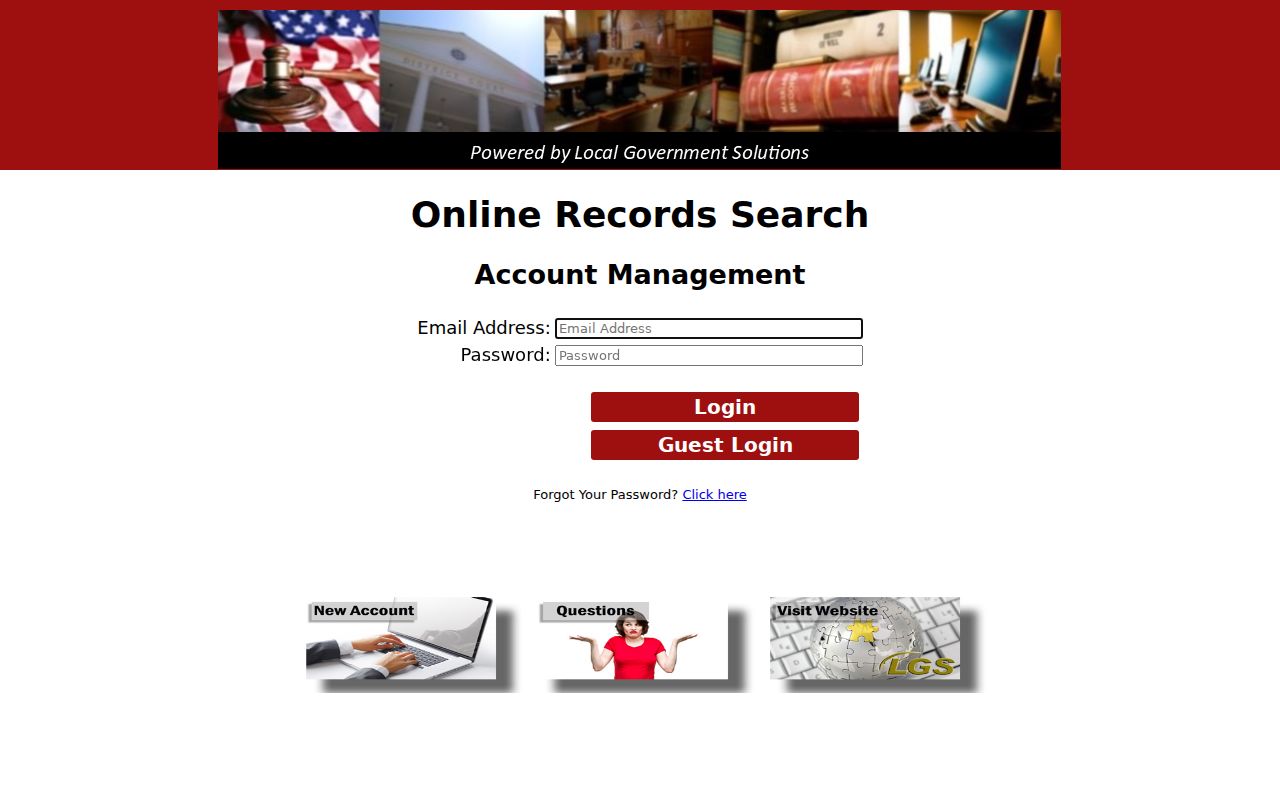
The screen is a starting point, not proof of a fixed year span or a free-document policy. Portal choices are entity-dependent. Once a Hall result appears, compare its case number, court, filing year, and charge before opening the docket. If Hall is absent from a menu or a criminal category is unclear, return to the clerk's own page and ask which index currently holds the case.
A namesake is a real risk in any party search. Use an exact cause number if it is available on a citation, bond paper, prior order, or clerk notice. When the case number is unknown, pair the name with the year and court. A list-row label is not a judgment.
Inside a Hall County Case File
A Hall County case file tracks the filed prosecution, not merely the original arrest allegation. It can identify the court, counsel, statute, count, settings, motions, pleas, judgment, and sentence. The docket is the chronological event log. The judgment and disposition are the best places to confirm whether a count ended in conviction, dismissal, acquittal, deferred adjudication, or another result.
| Case Number and Court | Identifies the Hall cause and the court that owns the file. |
|---|---|
| Charging Document | Shows the complaint, information, or indictment and the filed statute, class, or degree. |
| Docket Entries | Lists filings, settings, motions, orders, pleas, and other events by date. |
| Bond | May show amount, type, status, or a related capias entry. |
| Disposition and Judgment | Records the outcome for each count and any formal finding. |
| Sentence and Ledger | Can state custody, supervision, fine, court costs, and payment entries when exposed. |
Document access differs from field access. A public index may reveal a docket entry while the underlying pleading remains restricted or available only from the clerk. Certified copies come from the custodian, not from a screen capture. Hall's official sources do not post a criminal-copy or certification fee, so ask the clerk for the current amount.
Missing Hall Court Documents Online
The re:SearchTX search interface provides a statewide electronic layer for court research.
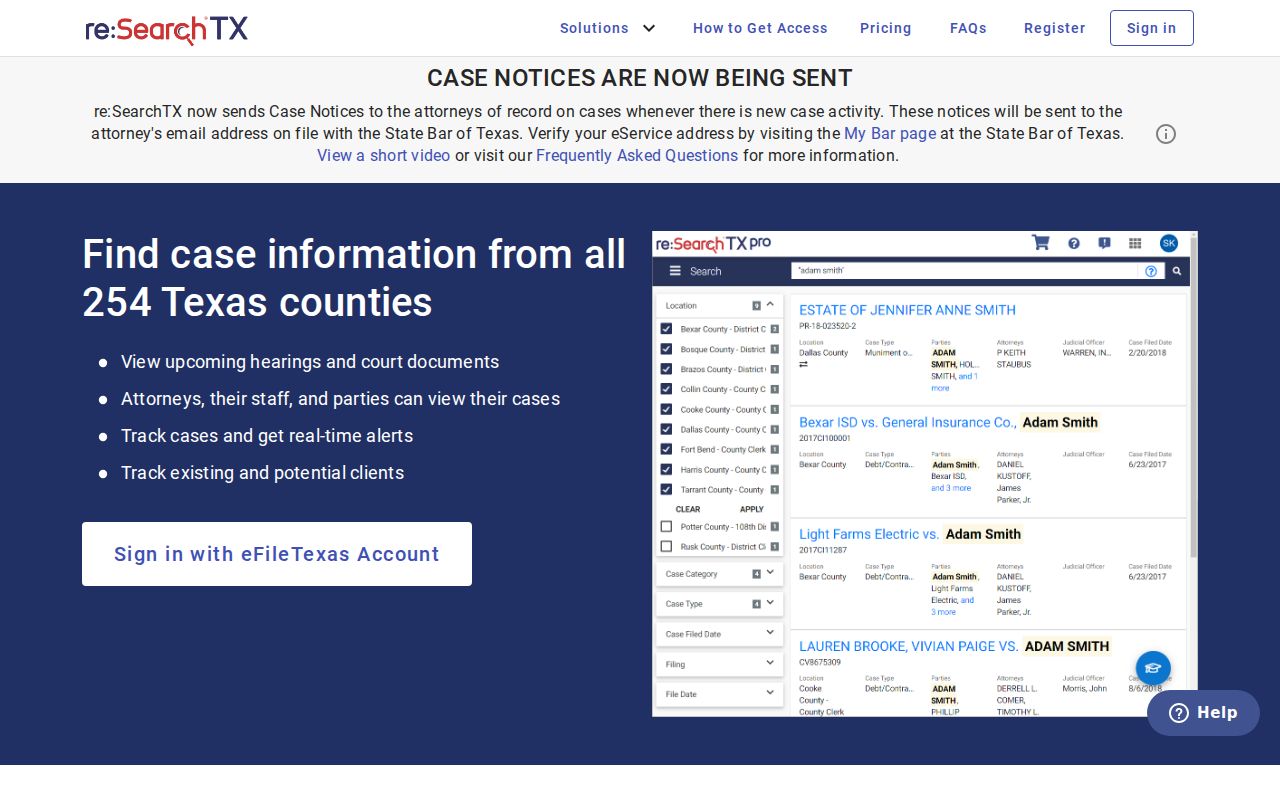
A blank remote result does not show that no Hall County case exists. The portal requires an account, access can depend on role, protected documents are withheld, and not every local criminal file is available through the statewide document system. Run the local LGS search as well, then ask the clerk to check the Hall index.
For an older matter, provide the name, approximate filing year, offense, and any known cause number. Say whether the goal is the docket, charging paper, judgment, or a certified disposition. That level of detail helps staff retrieve the right file from storage and keeps a broad request from obscuring the document that settles the question.
Note: No online result is conclusive when the Hall clerk confirms that older files remain in offsite storage.
How a Criminal Case Moves
A Texas arrest or summons may lead to complaint and bond proceedings, followed by prosecutor review. A misdemeanor can proceed by information. A felony commonly advances through a grand-jury indictment. Arraignment presents the charge and takes a plea. Discovery, motions, a plea agreement, or trial follow before judgment and sentence. A notice of appeal can move the case to the Seventh Court of Appeals, which serves Hall County.
Case flow: Charges Filed › Arraignment › Pretrial › Plea or Trial › Disposition › Sentencing
Do not read each stage as an outcome. An indictment is an accusation approved for prosecution, not a conviction. A setting is a scheduled court event. A plea may be followed by deferred adjudication or judgment. The docket supplies the sequence, while the signed disposition and judgment state what the court actually ordered.
Hall Court Files During Restoration
The clerk reports a local access condition that changes how researchers should plan. The courthouse is under restoration, the clerk works from the Annex, and records are kept in an offsite storage building. Research access is limited. An older Hall County criminal court file may therefore require an appointment rather than a same-day counter request.
The official 100th District Court page shows how Hall felony matters fit into the district's five-county court structure.
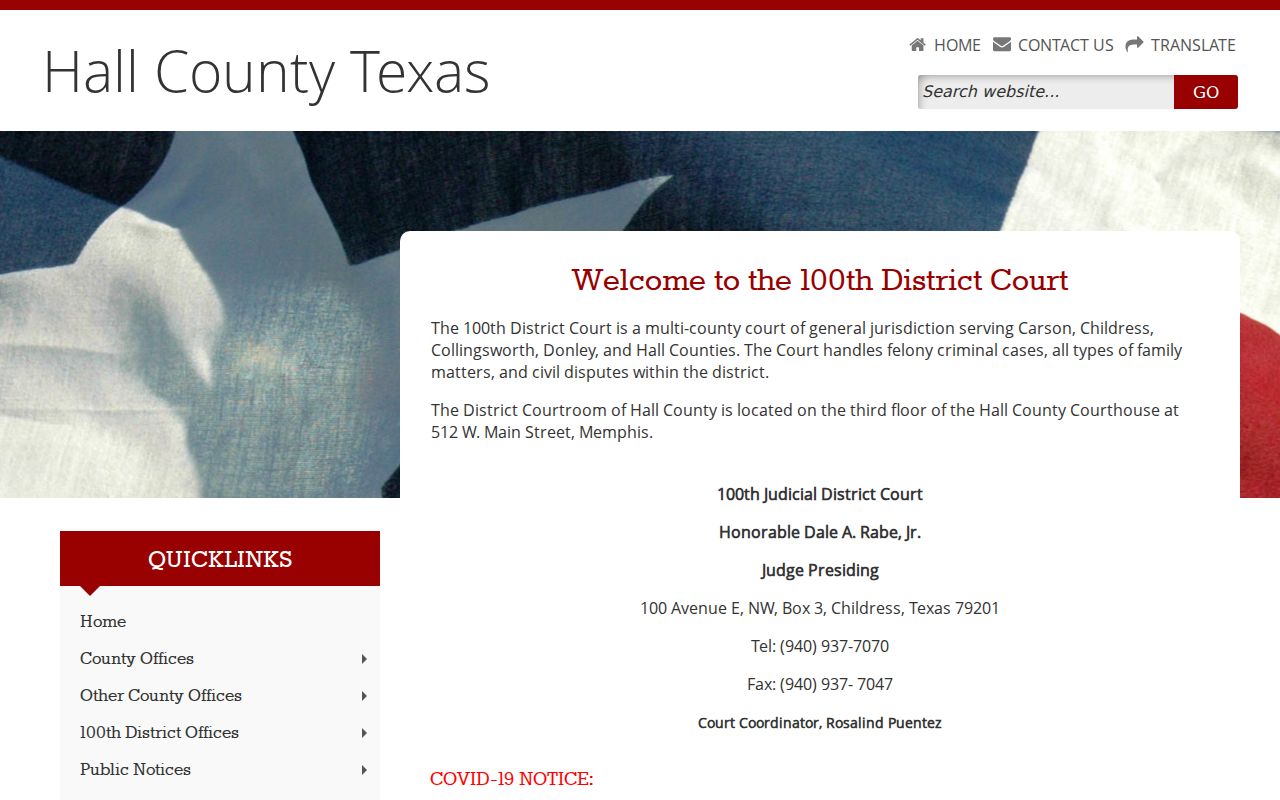
The district page helps confirm the court, but the Hall clerk remains the records custodian for Hall filings. Call 806-259-2627 before travel. Give staff enough facts to identify the file, request an appointment for old research, and ask whether inspection can occur before copies are ordered. The posted office hours differ on Friday, so verify timing as well.
Reading Hall Court Case Outcomes
Three terms prevent common errors. A cause number is the court's identifier for the file. A docket is its dated event list. A disposition is the current or final outcome of a charge. None can safely substitute for the others. A docket may list several counts, each with a different result.
- Dismissal
- A charge ends without a conviction, although the arrest record may still exist.
- No-bill
- A grand jury declines to approve an indictment.
- Deferred adjudication
- Supervision follows a guilty or no-contest plea without an immediate finding of guilt.
- Acquittal
- A not-guilty determination after the case is tried.
- Conviction
- A judgment of guilt, followed by a sentence or other court order.
If DPS lacks a Hall disposition or shows the wrong outcome, obtain a certified disposition from the combined clerk before using the Texas Department of Public Safety challenge process. The arresting agency corrects arrest-source data, the clerk or court corrects case data, and DPS updates repository data from authorized proof.
Hall Criminal Cases and Juries
The Hall County jury service page routes questionnaires, qualification questions, and exemptions through the combined clerk.
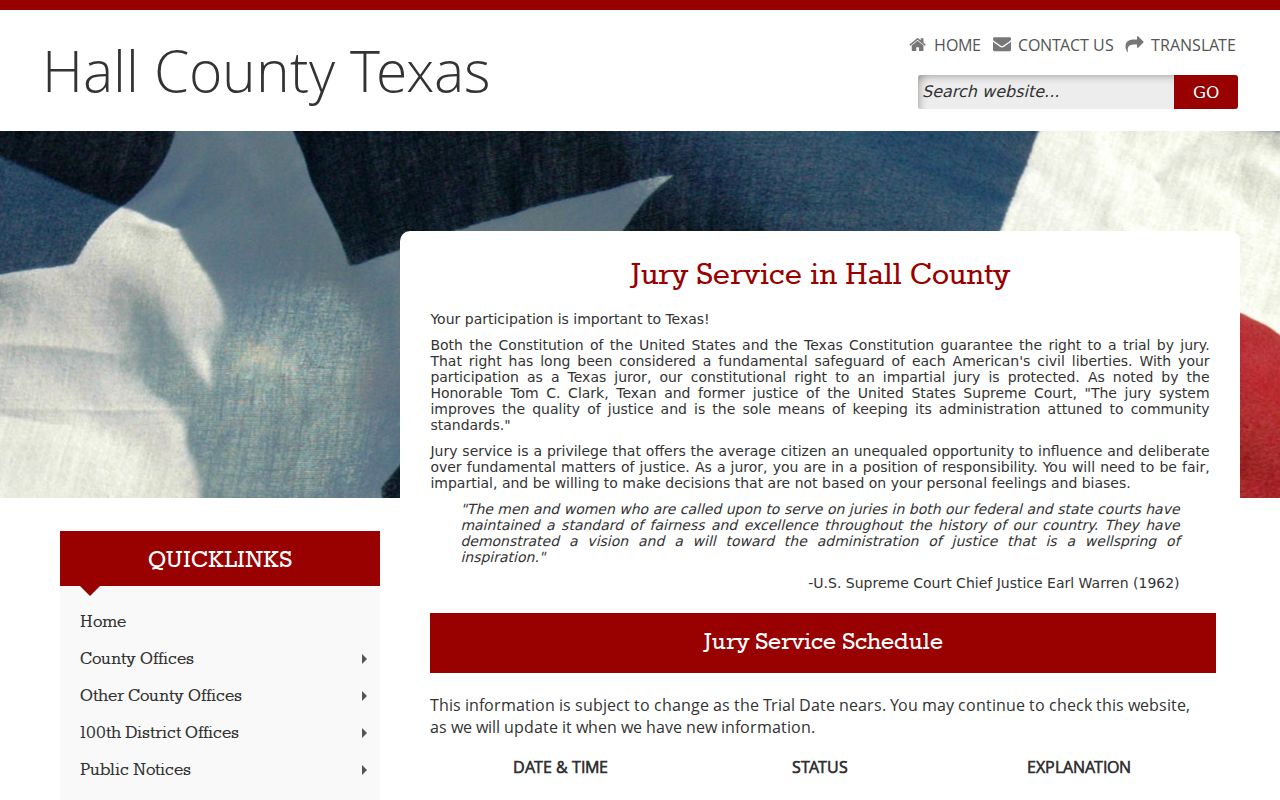
Jury information is not a substitute for the criminal docket. It does, however, confirm the clerk's central role in Hall court administration. A jury summons concerns the prospective juror, while a case docket may show that a jury setting, trial, verdict, or later order occurred.
People who need an accommodation or interpreter should contact the clerk in advance because no detailed local language or accommodation schedule is posted. That request is separate from a records request. Keep the two tasks clear when calling so staff can route each one correctly.
Case Record Access & Restrictions
Texas court records are generally open under court access rules, but judicial files are not handled exactly like executive-agency requests under the Texas Public Information Act. The clerk controls the judicial case file. Remote-access rules, sealing orders, and sensitive-data safeguards can make an online view narrower than the record available at the counter.
Public copies should not expose full Social Security numbers, protected victim or minor details, sensitive account data, or sealed and nondisclosed documents. Juvenile files receive separate confidentiality protection. Grand-jury deliberations remain secret even when a filed indictment later becomes public. An active warrant, sealed indictment, or protected filing may also be absent from a public portal.
Readers moving from an arrest entry to filed charges can use the county's Hall County arrest lookup for the custody trail, then return to the court judgment for the outcome. Comparing these records prevents an original allegation from being mistaken for the final charge.
Hall Court Copy Requests
For a certified Hall disposition, a complete docket, or a paper file that is not online, contact the combined clerk. The web form asks for a name, email, phone number, reason for inquiry, and a reCAPTCHA response. It does not publish a guaranteed turnaround or criminal-copy fee. State the exact document and ask for a written cost estimate.
Hall District and County Clerk
512 West Main Street, Suite 8
Memphis, TX 79245
806-259-2627
Mon-Thu 8:30-5; Fri 8:30-noon
Requesters should distinguish plain copies from certified ones and ask whether an appointment is needed. The clerk page provides the authoritative contact and LGS link. Advance notice matters most for old Hall County criminal court cases held outside the current office during restoration.